Daily Faceoff is a news site with no direct affiliation to the NHL, or NHLPA

NHL Trades

The Sharks have acquired Mike Hoffman, Cody Donaghey and a 2020 fifth-round pick from the Senators for Mikkel Boedker, Julius Bergman and a 2020 sixth-round pick.

Hoffman has two-years left on his contract that carries a $5.187M cap-hit. Hoffman, who scored 22 goals and 34 assists (56 points) in 82 games this past season. The 28-year-old is 24th in the NHL in goals (104) and 44th in points (224) over the last four seasons. His trade value took a hit last week when Erik Karlsson’s wife, Melinda, filed for an order of protection related to allegations of harassment against Hoffman’s girlfriend, Monika Caryk.

Mike Hoffman
The Coyotes acquired Alex Galchenyuk from the Canadiens for Max Domi on Saturday.

Galchenyuk, 24, has disappointed since being picked No.3 overall in 2012. Galchenyuk had a breakout campaign in 2015-16, when he collected 30 goals and 26 assists, but is tied for 110th in points (95) in two years since. Galchenyuk has had a difficult time sticking at centre during his NHL career, but the Coyotes are expected to use him as a pivot, likely on the second line behind Derek Stepan.

Alex Galchenyuk
The Canadiens acquired Max Domi from Arizona and signed him to a two-year contract worth $6.3 million ($3.15M AAV).

Domi was acquired from the Coyotes in a straight-up trade for Alex Galchenyuk. Domi was selected No.12 overall in 2013 and has yet to fully live up to expectations after a great rookie season—18 goals and 34 assists in 81 games. Since then he has scored just 18 goals with 65 assists (83 points) in 141 games. Domi brings some physicality along with great playmaking ability to the left-side of the Canadiens’ lineup, where he figures to slot in behind Max Pacioretty.

Max Domi
The Kings have acquired Peter Budaj from the Lightning for Andy Andreoff.

Budaj, who was acquired from the Kings back in February of 2017, appeared in just 15 games over a season and a half in Tampa Bay. Budaj was limited to just eight starts due to injury and poor play last season and was ultimately passed on the depth chart by Louis Domingue, who projects as Andrei Vaslievskiy’s backup next season. Budaj returns to Los Angeles, where he will be Jonathan Quick’s backup and where he was 27-20-3 with a 2.12 GAA, .917 SV% and seven shutouts while Quick was hurt in 2017.

Peter Budaj
The Lightning have acquired Andy Andreoff from the Kings for Peter Budaj.

Andreoff, 27, was drafted in the third-round (No.80 overall) in 2011 and has picked up just 24 points (13G / 11A) in 159 career NHL games. Andreoff, who had nine points in 45 games last season, will have to fight among one of the deepest forward groups for playing time in Tampa Bay in 2019. Andreoff may take the spot of Chris Kunitz, who will be a free agent in July, on the Lightning’s fourth line.

Andy Andreoff
The Oilers have acquired Cooper Marody from the Flyers for a 2019 third round pick.

Marody, 21, was a sixth round pick of the Flyers in 2015 and just wrapped up his junior year at the University of Michigan. Marody led Michigan in points, picking up 14 goals and 32 assists (46 points) in 37 games.

Cooper Marody
The Bruins have acquired Tommy Wingels from the Blackhawks for a 2019 5th round pick.

Wingels recently saw a bump in playing time in Chicago, but has just 12 points (7G / 5A) in 57 games this season. He will likely have a hard time finding playing time on a talented Bruins roster.

Tommy Wingels
The Canadiens acquired Mike Reilly from the Wild for a 2019 5th round pick.

Reilly was a prospect with a lot of offensive potential when he reached the NHL, but it has not materialized. The 24-year-old has just 18 points (4G / 14A) in 84 career NHL games, but should get his best shot at playing time with a Montreal team that is out of the playoff picture.

Mike Reilly
The Jets acquired Joe Morrow from the Canadiens for a 2018 4th round pick.

Morrow has picked up five goals and six assists (11 points) in 38 games with the Canadiens this season. Morrow was drafted with a lower of offensive potential but it hasn’t really developed as expected on the NHL level. He will serve as a depth defenseman on a good Winnipeg team.

Joe Morrow
The Hurricanes have acquired Greg McKegg from the Penguins for Josh Jooris.

McKegg, 25, has split his season between the AHL and NHL this season. The former third-round draft pick (No.62 in 2010) has two goals and two assists in 26 NHL games and 12 points (5G / 7A) in 28 AHL contests. He is expected to report to Charlotte (AHL).

Greg McKegg
The Penguins have acquired Josh Jooris from the Hurricanes for Greg McKegg.

Jooris has just six points (3G / 3A) in 31 games this season and is expected to go to Wilkes-Barre/Scranton (AHL) right away. This is a minor trade and Jooris will likely serve as wing depth during the postseason.

Josh Jooris
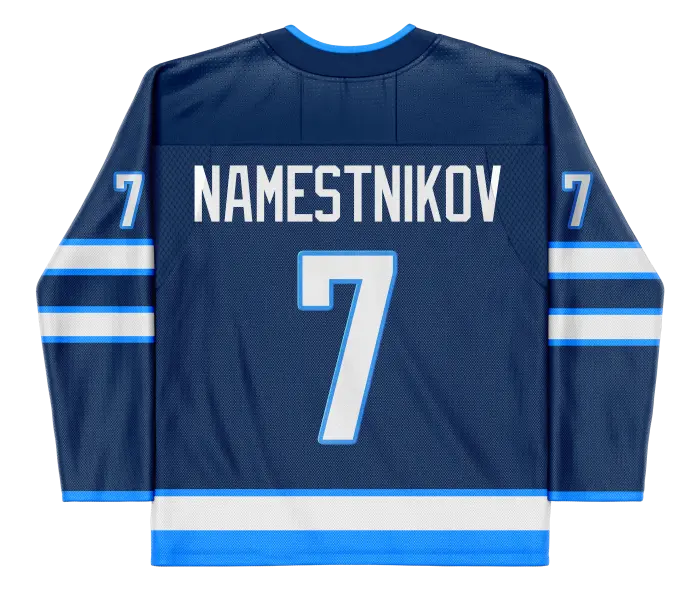
The Rangers have acquired Vladislav Namestnikov, Libor Hajek, Brett Howden, 2018 1st Round Pick and a conditional 2nd Round Pick from the Lightning for Ryan McDonagh and J.T. Miller.

Namestnikov had a blistering start to the season picking up 33 points (15G / 18A) in his first 38 games but has struggled with just 11 points (5G / 6A) in his last 24. In New York he won’t have the luxury of playing with Steven Stamkos and Nikita Kucherov, but he should still play a top-6 role.

Vladislav Namestnikov
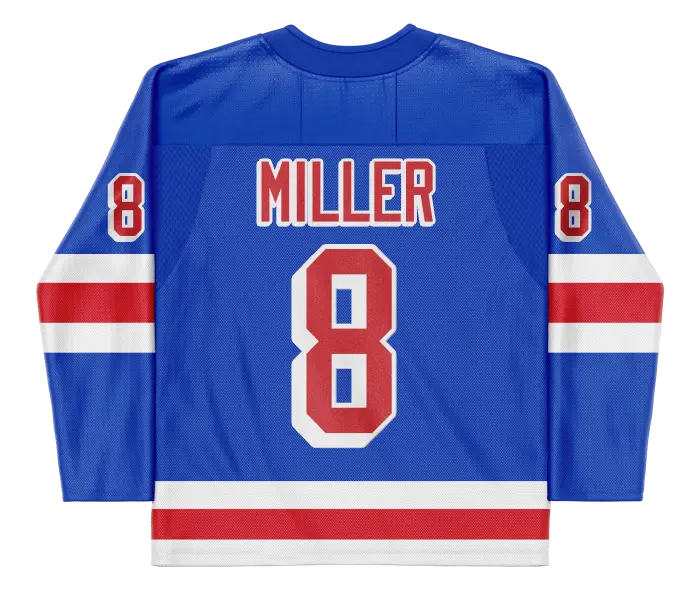
The Lightning have acquired J.T. Miller and Ryan McDonagh from the Rangers for Vladislav Namestnikov, Libor Hajek, Brett Howden, 2018 1st Round Pick and a conditional 2nd Round Pick.

Miller basically replaces Vladislav Namestnikov in the Lightning lineup, but may not see the first line ice-time that Namestnikov was playing. Miller brings a solid amount of offence to the table as well, having picked up 13 goals and 27 assists (40 points) in 63 games with the Rangers. He should play a very similar, middle-6 role with some PP time as he did in New York.

J.T. Miller
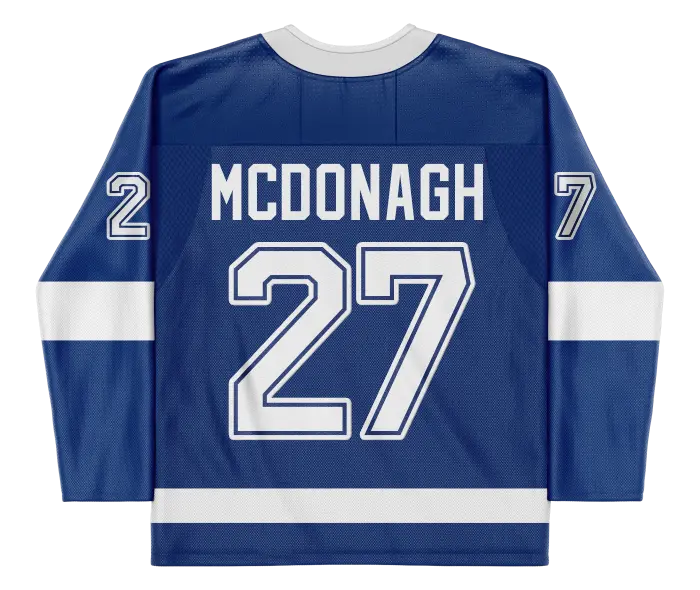
The Lightning have acquired Ryan McDonagh and J.T. Miller from the Rangers for Vladislav Namestnikov, Libor Hajek, Brett Howden, 2018 1st Round Pick and a conditional 2nd Round Pick.

McDonagh has missed the last nine games with an upper-body injury but is expected to be back in the near future. His 50th game of the season will come in a Lightning uniform, but his fantasy value may actually take a hit because he will probably see less minutes behind Victor Hedman. McDonagh boosts the Lightning’s blueline a lot and make them and solidify them as Stanley Cup favourites.

Ryan McDonagh
The Devils have acquired Patrick Maroon from the Oilers for J.D. Dudek and a third round draft pick.

Maroon had a career-year while playing with Connor McDavid in 2016-17, but couldn’t quite find the same success this year. With his contract expiring at the end of the season and the Oilers out of the playoff hunt they had to trade him. Maroon made it seem possible that he could return to the Oilers this summer, but for now he heads to the Devils where he could find himself in the top-6.

Pat Maroon
The Flames have acquired Nick Shore from the Senators for a 2019 7th round pick.

Shore, who was recently acquired by the Senators in the Dion Phaneuf trade, is moved again after picking up just one assist in six games in Ottawa. Shore heads to the Flames, who were looking for a right-handed centre with four goals and 12 assists (16 points) in 55 games this year.

Nick Shore
The Golden Knights have acquired Tomas Tatar from the Red Wings for a 2018 1st Round Pick, a 2019 2nd Round Pick and a 2021 3rd Round Pick.

No one expected the Golden Knights to be buyers at their first trade deadline but here we are. Tatar has picked up 16 goals and 12 assists (28 points) in 62 games with the Red Wings this season and should be a great fit on Vegas’ third line with Cody Eakin and Alex Tuch.

Tomas Tatar
The Canucks have acquired Jussi Jokinen and Tyler Motte from the Blue Jackets for Thomas Vanek.

Jokinen heads to his fourth team this season and has picked up just one goal and six assists (seven points) in 46 combined games with the Oilers, Kings and Blue Jackets. After a great year in 2015-16, Jokinen has no fantasy value at this point in his career.

Jussi Jokinen

NHL Trade Tracker

Are you looking for all the latest NHL trade news from around the league? Then you’ve come to the right spot! Daily Faceoff’s NHL trade tracker provides up-to-the-minute updates on the latest personnel moves and trade rumours from all 32 franchises. When your favourite player gets dealt for future considerations, you’ll be the first to know!

Along with our NHL trade tracker, we also provide information on how hockey trades work, the strategy behind these moves, and how the latest NHL trades could impact your sports betting strategy.

It’s important for fans, sports bettors, and fantasy managers to stay informed on the latest NHL transactions. If you can keep tabs on the latest moves in the NHL, this can assist you in making intelligent pickups or trades in fantasy hockey and help shape your bets based on the new personnel added to a team.

NHL Trade Rules

NHL trades can be quite lucrative, with players, prospects, and draft capital moved to complete a deal. While there are a variety of ways to finalize trades, they all need to abide by the trade rules and regulations set by the league. Even the San Jose Sharks can’t take on everyone’s bad contracts.

Learn more about the rules around trades below so you can better understand how trades work, and the transactions made in our NHL trade tracker.

Salary Cap

In order for any NHL trade to be processed successfully, all parties involved must abide by the league’s salary cap rules. The current NHL salary cap is $88M, meaning that each team’s total payroll must fall within the budgetary restriction.

The salary cap in the NHL is considered a “hard cap,” meaning that no team can exceed it. While the limitations around roster construction can be strict, there are still ways for teams to legally exceed the set limit that won’t cost teams a first-round pick.

In the playoffs, teams are technically able to exceed their cap space through the long-term injured reserve (LTIR). The LTIR allows teams to place injured players on extended leave (24+ calendar days or 10 NHL Games) and fill their roster spots based on their cap space heading into the regular season.

If a player is on the LTIR heading into the postseason, they can be activated regardless of if their re-addition to the team puts them over the salary cap.

Roster Limit

For any active NHL roster, they can only dress 23 skaters. While they’re able to move players up and down through their farm system (AHL/ECHL/International Players), they must abide by this player limit when it comes to active players dressed in each game.

This plays a big factor in determining trades, as teams will need to make salaries work to make the move official and fit the current team’s available roster spots.

Depth is an incredibly important part of any successful NHL team, so filling out their roster with talented players is pivotal to their success. Each roster spot holds immense value.

NHL Trade Deadline

The NHL trade deadline is the last opportunity for teams to make moves between each other during the regular season. The trade deadline generally falls after the All-Star break so teams can make their last-ditch efforts before the playoffs begin. Players must be on the team’s roster by the deadline at 3 PM to be eligible for the NHL playoffs.

Technically, teams can still make trades after this point if they don’t qualify or have been eliminated from the postseason. These trades will not take effect until the next season, but the transactions can still go through.

The deadline can make or break a team’s playoff hopes, making it a dramatic and hectic period for hockey fans and managers alike. Be sure to regularly check back with our NHL trade tracker around the deadline so you don’t miss any latest moves from across the league.

Understanding the Strategy Behind NHL Trades

NHL teams may want to make a trade for a number of reasons. Often, teams make trades when they are looking to head in a certain direction, whether this means trying to improve and compete for the Stanley Cup or tank and enter a rebuild.

A team that feels it has a strong enough unit to make a deep run into the postseason will likely forgo some of its draft capital to acquire proven talent and enhance its winning capabilities.

Conversely, a team that has hit a wall in terms of success and doesn’t feel they have what it takes to compete in the playoffs may opt to trade away valuable assets in favour of draft picks or promising prospects.

Other NHL trade strategies may involve team culture/personnel fits. If a player doesn’t fit within a coach’s game plan or doesn’t have chemistry with his line mates, teams may opt to deal him to find a better fit.

For daily fantasy sports players or hockey bettors, understanding the logic behind NHL trades can play a big part in your success. If you have a solid understanding of a team’s needs and the value brought by particular players, you can use this to gain an edge on your roster moves and bets.

Check out the most recent roster moves from around the league with our NHL trade tracker, and be sure to analyze the strategy used by each team when making their next move.

How NHL Trades Impact Sports Betting

NHL trades can have a major impact on sports betting, both in terms of daily games and futures. Players moving from team to team can alter a squad’s potential success and on-ice production.

For example, if a team decides to trade their leading goal-scorer, you can rightfully assume that their overall scoring numbers may drop as a result. This means a team you once would’ve taken the Over on may be better suited for the Under due to their new lineup.

Acquiring an all-star player for futures bets can dramatically influence the betting lines, increasing one team’s value while dropping another. If you’ve already placed a futures bet and the team you wagered on makes a trade, this could possibly increase or lower the value of your original ticket, depending on the result of the roster change.
Daily fantasy hockey players can also be impacted by NHL trades as you will need to see how a player fits into their new setting before including them in your drafted lineup.
Be sure to watch for any of the latest transactions by using our NHL trade tracker to stay informed on all the roster changes occurring throughout the league.

NHL Trades FAQs

Who decides NHL trades?

NHL trades are decided between two or more team general managers. The front office’s job is building a winning team. Building a winning team means discussing trades with other general managers across the league.

When can players be traded in the NHL?

During the NHL regular season, players can be traded up until the trade deadline. The deadline is the official cutoff point for when teams can no longer make moves between each other. Players can also be traded throughout the offseason.

Why do they trade players in hockey?

Teams trade players in hockey for a variety of reasons, but generally, it is done to find success, whether that is in the short term or long term. Teams may trade their top players in search of draft picks if they are undergoing a rebuild, whereas contending teams may look to acquire talent to boost their playoff chances.

How often are NHL players traded?

Trades are a common occurrence throughout the NHL and happen often. Some years feature less trades than others, it all depends on each teams needs and the availability of attractive talent.